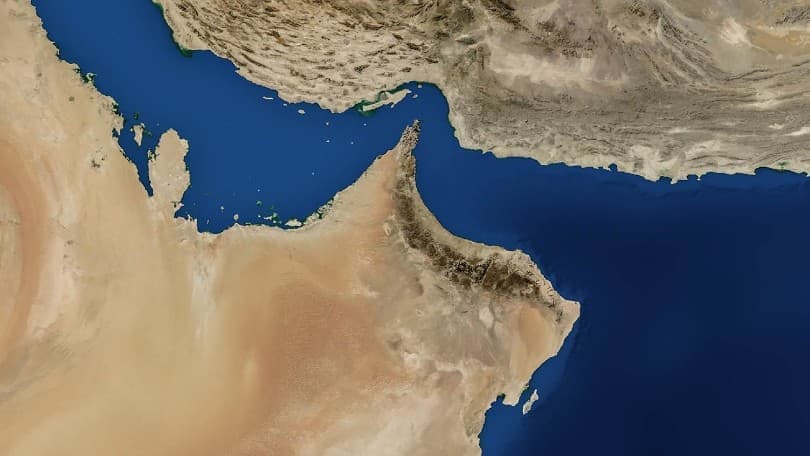
Analysts Warn Hormuz Blockade Could Send Oil Above $300
Some analysts think that oil prices could reach more than $300 per barrel in the case of a full blockade of the Gulf of Hormuz. Home Oil Prices Oil Futures Rig Count Energy Energy-General Oil Prices Crude Oil Heating Oil Gas Prices Natural Gas Coal Company News Interviews Geopolitics Energy-General Oil Prices Crude Oil Heating Oil Gas Prices Natural Gas Coal Company News Interviews Geopolitics Alternative Energy…
Wild Oil Price Forecasts: Some Predict $350 if Strait of Hormuz Is Blocked | OilPrice.com
Home
Oil Prices
Oil Futures
Rig Count
Energy Energy-General Oil Prices Crude Oil Heating Oil Gas Prices Natural Gas Coal Company News Interviews Geopolitics
Energy-General
Oil Prices
Crude Oil
Heating Oil
Gas Prices
Natural Gas
Coal
Company News
Interviews
Geopolitics
Alternative Energy Nuclear Power Solar Energy Hydroelectric Renewable Energy Geothermal Energy Wind Power Fuel Cells Tidal Energy Biofuels Environment Global Warming Oil Spills
Nuclear Power
Solar Energy
Hydroelectric
Renewable Energy
Geothermal Energy
Wind Power
Fuel Cells
Tidal Energy
Biofuels
Environment Global Warming Oil Spills
Global Warming
Oil Spills
Company News
Breaking News
Premium Articles
My Account
All Prices
OPEC Blends
Canadian Blends
U.S. Blends
Click Here for 150+ Global Oil Prices
Click Here for 150+ Global Oil Prices
Click Here for 150+ Global Oil Prices
Click Here for 150+ Global Oil Prices
Click Here for 150+ Global Oil Prices
Click Here for 150+ Global Oil Prices
Click Here for 150+ Global Oil Prices
Click Here for 150+ Global Oil Prices
1D
1M
3M
1Y
Headlines
13 hours BLM Moves to Fast-Track Oil Permits in Alaska Petroleum Reserve
16 hours Citadel Eyes U.S. Shale as Oil Trading Moves Closer to the Wellhead
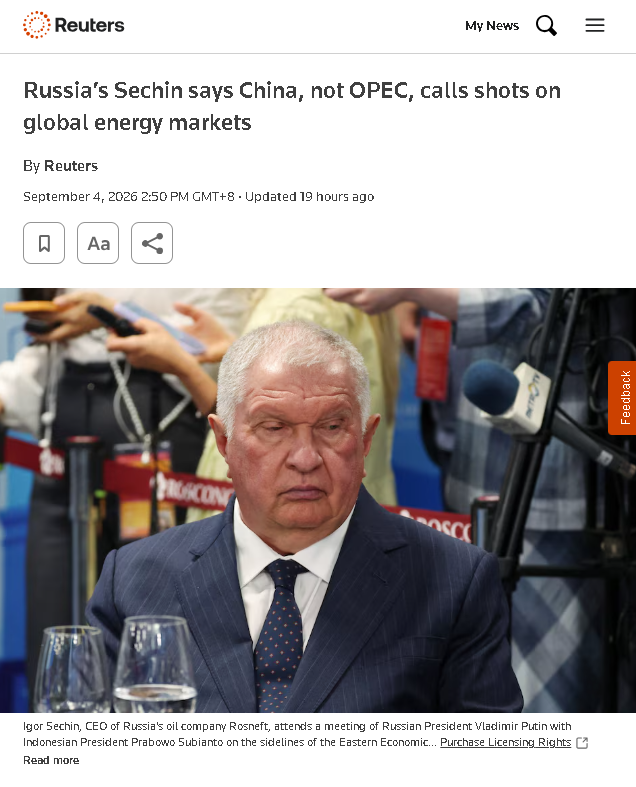
17 hours Rosneft CEO: China Calls The Shots in Oil Markets, Not OPEC
18 hours China Rare Earth Firms Freeze U.S. Exports Weeks Before Xi-Trump Summit
19 hours India Plans Mandatory Battery Storage at Solar and Wind Projects
20 hours Iran Says It's Found Ways to Dodge U.S. Oil Blockade
21 hours Europe Gas Prices Head for Fourth Straight Weekly Gain
22 hours U.S. Diesel Prices Hit All-Time High as Global Fuel Squeeze Deepens
23 hours Argentina Targets Falklands Oil Drillers With Tougher Sanctions
1 day UK Poised to Approve Jackdaw Gas Field as Energy Costs Soar
1 day ADNOC Keeps Loading LNG as Hormuz Risks Intensify
1 day Brent Nears $96 as Iran Conflict Keeps Oil Market on Edge
2 days High Oil Prices Speed Up China’s Shift Away From Crude
2 days Machado Backs U.S. Oil Partnership but Questions Venezuela Deal
2 days Norway Seizes Russian Cruise Ship to Enforce Naftogaz's $4.22 Billion Claim
2 days Russia’s Oil Revenue Sinks as Urals Falls to $59
2 days Russia Says Oil Output Drop Is Temporary as Refineries Restart
2 days Hormuz Disruptions Could Drag Into Next Year, Japanese Tanker Giant Warns
2 days Iraq Hikes Oil Exports via Hormuz in Boon for Asian Refiners
2 days Global Refining Crunch Could Keep Fuel Prices High Into 2027
2 days Europe’s Low Gas Stocks Set Stage for Winter LNG Battle
2 days Chinese Refiners Pay Record Premiums for Russian ESPO Crude
2 days Asian LNG Prices Surge to Highest Since 2022 as Iran War Escalates
2 days Asian Oil Buying Spree Sends Dubai Crude Toward $100
3 days OPEC+ Set to Hold Oil Output Steady as Iran War Disrupts Supply
3 days Chevron Bets $7 Billion on Venezuela Oil Expansion
3 days Hormuz Traffic Craters to Four Ships as Iran-U.S. Strikes Escalate
3 days UN Warns Global Warming Will Top 1.5C Within Years
3 days Ryanair Warns Some Airlines Could Struggle with Jet Fuel Price Spike
3 days India Boosts Far East Russian Oil Imports as War Upends Trade Routes
3 days Kazakhstan to Double Oil Refining Capacity by 2040
RT @MartinLZinn: Just as Beijing’s huge stimulus programme helped the West recover from the 2008 financial crisis, once again China is prov…
RT @maxotte_says: Arnaud Bertrand hat immer sehr gute geopolitische Analysen.
This hasn't been talked about much but it may be one of the most consequential revelations of the US's war on Iran: the fact that China has effectively replaced OPEC as the global price setter for oil. It isn't me saying it but Igor Sechin, CEO of Rosnef, the largest oil producer in Russia - itself a member of OPEC+ (https://t.co/ckinOaHzJ7) And Sechin isn't alone in saying so: many Western analysts - such as Javier Blas, Bloomberg's top energy analyst - are essentially saying the same thing (see https://t.co/cpcCKLdMCv) How so? Well, China has demonstrated during the Iran war an extraordinary ability to…
Read full post
simply walk away from the market and slash its oil imports by millions of barrels per day - during a months on end. At peak, they slashed imports by 5.5 million barrels per day, the equivalent of India's total consumption. They can, quite literally, switch an entire India's worth of demand on and off, at will. This is mainly because they have immense strategic oil reserves, estimated to stand at 1.4 billion barrels (https://t.co/jyTb2Srcnz) - 4 times bigger than the US's (the world's second largest inventory). In a nutshell, prices being, as everyone knows, set by supply and demand, China now controls the demand side in a bigger way than OPEC controls the supply side. So, as Sechin puts it, they now call the shots. All the more given that OPEC is weaker than it's ever been with the recent loss of the UAE, the largest producer ever to walk out. This is what effectively saved the world's economy during the Iran war: analyst after analyst predicted that the closure of Hormuz would make oil prices skyrocket to stratospheric levels, like $200-$300 a barrel (https://t.co/PTU64I3zGl). However, Hormuz is still closed and prices sit at... $91 a barrel, after briefly peaking at around $110 in April (https://t.co/eufRaK4EnB). China almost single-handedly made this happen with their flexibility on the demand side: what Hormuz made the world lose in supply, China basically cut in demand, which stabilized prices. Long story short, as the saying goes: "never let a good crisis go to waste." China used this one to effect a friendly takeover of the most powerful cartel on earth - without even joining it.
Fascinating argument by Bloomberg's top energy analyst Javier Blas 👇: he argues that China effectively saved the world economy during the Iran war by absorbing the brunt of the global oil supply shock on its own, without visible economic damage. According to his calculations, China "cut its average daily waterborne oil imports by the same amount as the…
Read full post
combined oil consumption of Germany, France and the UK." And, still according to Blas, they "did so without suffering economic harm" because they could rely on many levers: their huge strategic petroleum reserve, a massive surge in EV usage, their remaining coal-fired electricity capacity, and coal-to-chemicals replacing lost feedstocks. Had China not been ready to absorb that blow, a good argument can be made that the economic damage to the West, and the world at large, would have spiraled far beyond what we saw. Effectively, China's energy strategy at all levels (petroleum reserves, EVs, etc.) and its ability to withstand huge supply shocks paid off for everyone, not just for them. It sounds awfully familiar: in 2008 too it was China's stimulus package and continuous buying of US Treasuries that averted a complete breakdown of the global financial system. So twice in 20 years the country the West loves to present as a "threat" to the global economy effectively saved it from a US-made global economic disaster 🤷
Original title: Wild Oil Price Forecasts: Some Predict $350 if Strait of Hormuz Is Blocked | OilPrice.com
Samuel Times preserves the original link so every selection remains auditable.